Music Agency
Chi siamo
Photo Album
Sed ut perspiciatis unde omnis iste natus error sit voluptatem accusantium doloremque laudantium, totam rem aperiam, eaque ipsa quae ab illo inventore veritatis et quasi architecto beatae vitae dicta sunt explicabo.
Photo Album
Sed ut perspiciatis unde omnis iste natus error sit voluptatem accusantium doloremque laudantium, totam rem aperiam, eaque ipsa quae ab illo inventore veritatis et quasi architecto beatae vitae dicta sunt explicabo.
Photo Album
Sed ut perspiciatis unde omnis iste natus error sit voluptatem accusantium doloremque laudantium, totam rem aperiam, eaque ipsa quae ab illo inventore veritatis et quasi architecto beatae vitae dicta sunt explicabo.
Photo Album
Sed ut perspiciatis unde omnis iste natus error sit voluptatem accusantium doloremque laudantium, totam rem aperiam, eaque ipsa quae ab illo inventore veritatis et quasi architecto beatae vitae dicta sunt explicabo.
FRIDAY, APRIL 10 | 6:30PM
ITALIAN CULTURAL INSTITUTE SAN FRANCISCO

Giulia
Caminito
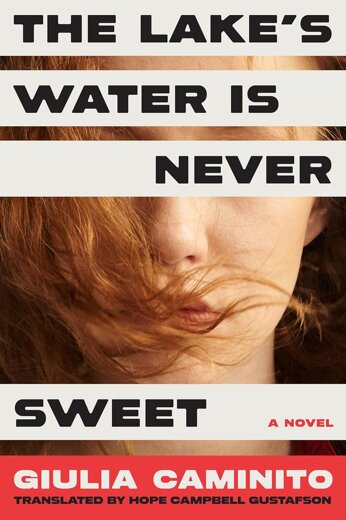
The Lake's Water is Never Sweet
MODERATOR
Cristina Farronato
UC Berkeley
EVENT IN ENGLISH
photo credit: Andrea Ottaviani
FREE ADMISSION | OPEN TO THE PUBLIC
In the 1990s, Gaia’s family moves from the neglected peripheries of Rome to an idyllic lakeside town twenty miles away, in search of a new life that will lift them out of poverty. Each of them bears their own scars: Gaia’s strong-willed mother is fiercely determined to secure a better future for her children at any cost; her father, a once proud man, now suffers in bitter silence after a devastating accident; her anarchist older brother rebels against the political apathy he sees at home; and her young twin brothers wordlessly bear witness to a family in decay.
When Gaia meets two local girls, Agata and Carlotta, the trio builds a fragile friendship throughout their adolescence based as much on their insecurities and jealousies as it is on their mutual affection. Gaia’s encounters with callous boys and contemptuous teachers convince her that she might always be an outsider—excluded from a privileged life and perhaps even beyond the possibility of happiness. Faced with bullying and betrayals among her peers and immense pressure from her mother to excel, Gaia turns inward and her world becomes increasingly insular. Then tragedy strikes her friend group. As more friends slip away and her family fractures, Gaia vows to make the world pay for all the things it has denied her.
Winner of the Campiello Prize, The Lake’s Water Is Never Sweet is an unflinching portrait of a generation, striving to make a place for themselves in a world markedly different from the one their parents promised them. With psychological acuity and stylish prose, Caminito takes us into the volatile, searching mind of a young woman torn between her desire to connect with others and her drive for self-preservation. In a novel that has been acclaimed by readers around the world, Caminito shows how tenderness and fragility often lie just beneath the surface of simmering fury.
THE AUTHOR
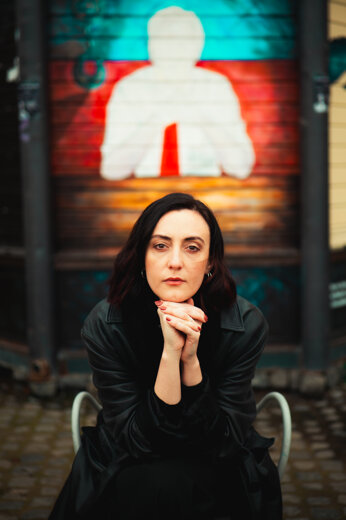
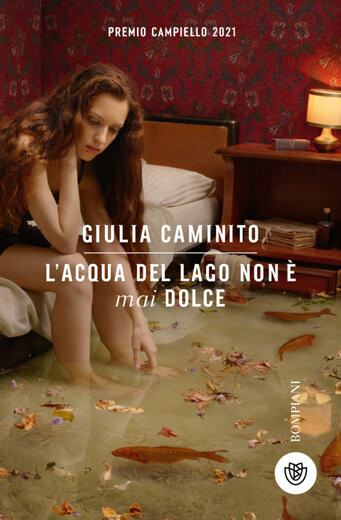
Giulia Caminito was born in 1988 and lives in Rome. Her first novel La grande A (Giunti, 2016) won the Premio Bagutta Opera Prima, the Premio Berto and the Premio Brancati Giovani. She published for Bompiani Un giorno verrà, L'acqua del lago non è mai dolce (winner of the Premio Campiello 2021 and finalist for the Premio Strega 2021), and Il male che non c'è (2024). Her books are translated in over 20 countries. She writes for magazines and newspapers, and also works in publishing.
THE MODERATOR
Cristina Farronato is a Lecturer and Language Program Coordinator in the Department of Italian Studies at the University of California, Berkeley. Her research focuses on contemporary Italian literature and culture, semiotic theory, including the semiotics of film, as well as linguistics and translation studies. She has a particular scholarly interest in the work of Umberto Eco and the intersections between literature, visual culture, and theory.
She is the author of Eco’s Chaosmos: From the Middle Ages to Postmodernity, a study of Umberto Eco’s intellectual and literary trajectory, and has published numerous articles on Eco, semiotics, Italian fiction, film, and the visual arts.